Update:
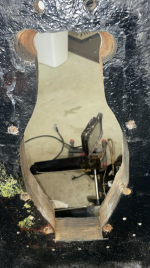
I pulled the engine, reinstalled the drive and submerged my boat at the ramp. As before, the water accumulated in the trim hose cavity at the bottom of the transom bracket. I found that the lower transom nuts were not-tight and movable.
I pulled the boat out and could observe water leaking out from the bottom of the gimble housing to transom connection, behind the trim manifold, on the exterior.
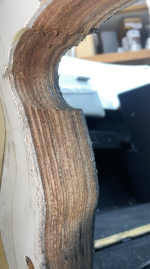
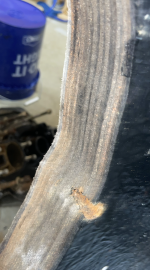
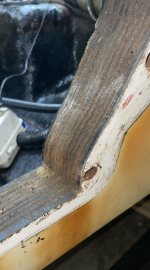
I snugged the nuts. There was no cracking, crunching sounds or play. I then re-submerged and there was NO LEAK. I poked around the bracket and inside the cavity and all the wood feels solid. *I REALIZE THAT THERE COULD STILL BE ROT*, and I will do some test bores to verify. If there is rot, I'll get that resolved first. if not,
My plan is to remove the Y-Pipe and replace the gasket, and while I have it off, check for rot, then torque the bracket bolts to specification.
I will be replacing the bellows and trim sensors, and trim manifold gasket when I rebuild, so the bell housing is coming off. This is a 25 year old boat with original bellows (which were not leaking). I'm also replacing all water hoses, and the front timing cover and seal while the engine is out.
Question: should I loosen the transom bracket bolts, flush with salt away (salt water has been introduced), and either replace the bracket ORING or (don't shoot me) apply a marine silicone sealant before torquing the bracket down? I'd like to avoid tearing out the transom assembly but will, if that's the best approach. Can I replace the seal without ripping the transom assembly apart?
Are there other parts I should look to replace while the engine is out and bell housing disassembled? I have a replacement shift shaft bearing, but mine is not leaking. I replaced the shift cable and cable bellows a couple years ago.
Thanks!






 It’s out