



2005 Mercruiser 5.0L MPI (bravo 3) suddenly started overheating

ostrichegg

Cadet
Joined
Dec 26, 2025
Messages
6
Hi, I have a 2005 Mercruiser 5.0L MPI (bravo 3) on a 1998 Sea Ray sundancer. Boat has run fine for the most part. Usually runs at 170 degrees all day. Took it out today and it warmed up to 170 and just sat there. Once driving, after about 2 miles I looked down and it was running just a bit warm, maybe like 175 or 180 or something. I thought, that's weird. Slowed down and eventually transitioned back to idle speed and the temp gauge shot up over 200 (still at idle speed). So I turned it right off and the temp crept back down over about 60 seconds until it hit back down around 170. And then it mostly stayed there but cooled off over a hour or two.

At some point, I figured I would just drive it back to the dock since it cooled off. Started it up and it ran just a little hot again. I was going displacement speed, maybe 8 mph. It hit about 175 degrees and then very, very slowly started creeping up to 180, 185, 190, 195 and then I hit the marina and had to slow down to 3 mph. As I did that, the temperature surged up to 215 degrees and started climbing rapidly up to 220, which is when my temp alarm went off. So I turned it back off and waited for it to cool down (let it sit about about an hour, which was so frustrating as I was only about 50 yards to the ramp!). Started back up and got to the ramp with no issues. Now it seems to be running fine on muffs. Can't get the temperature to go up past 170, although of course there isn't a load on it or anything.

What could cause this behavior? If I can't get it to overheat now, am I good or does the engine behave differently with a load (and not in "throttle only" mode)?

I'd appreciate any guidance. Thanks!
 

alldodge

Moderator
Staff member
Joined
Mar 8, 2009
Messages
43,994
Might have found a plastic bag floating around and it wrapped it self around the drive. Check your impeller because if may have been burned
 

ostrichegg

Cadet
Joined
Dec 26, 2025
Messages
6
Might have found a plastic bag floating around and it wrapped it self around the drive. Check your impeller because if may have been burned
Thanks. I should have noted, I thought maybe seaweed or something (or maybe a bag) got my drive. But, I don't see anything on the drive. Plus, I've had that happen only a few times in my life and usually it dislodges after the first time I slow down and stop. Either way, don't see anything on the drive now... but thanks for the idea, it was a good thought!
 

Kola16

Petty Officer 1st Class
Joined
Jun 23, 2019
Messages
228
Just because it does not overheat on the hose, does not mean it won't overheat in the water. Only one way to test it though (put it in the water). There are many other questions that can be asked though. How does your impeller look? When is the last time you changed your impeller? I am assuming this is fresh water cooled? Are there any blockages in your heat exchanger? Is the anode in your heat exchanger new or has it crumbled away causing clogs? Is your coolant level full? When was the last time your manifolds and risers were replaced?
 

ostrichegg

Cadet
Joined
Dec 26, 2025
Messages
6
Just because it does not overheat on the hose, does not mean it won't overheat in the water. Only one way to test it though (put it in the water). There are many other questions that can be asked though. How does your impeller look? When is the last time you changed your impeller? I am assuming this is fresh water cooled? Are there any blockages in your heat exchanger? Is the anode in your heat exchanger new or has it crumbled away causing clogs? Is your coolant level full? When was the last time your manifolds and risers were replaced?

Yep, thanks!
Answers:
1) Not sure how impeller looks, but it was replaced about 6 months ago, maybe 8 months ago.
2) This is raw water cooled, in saltwater. So no heat exchanger or coolant issues
3) This I am not sure of. I know for sure they were changed in 2005 and again in 2011, and when I got the boat, they were apparently changed "recently" (so I would guess like 2022 or so). They looked pretty new when I got them, even now there's relatively minor rust on the outside with the exception of the spacers which do look rusty now that I'm really looking at them. Interestingly, I had already ordered the parts to change the manifolds, spacers, and elbows out figuring I would need to do it eventually, but what are the odds that I place an order for these parts and then like the next day my engine that's been running great starts having overheat issues? Would be very coincidental.

Here's another thought I had. I was just thinking the other day that I need to rebuild my transom flush port as I think it's basically just a hose that goes down and taps into my water system, and I wanted to build something that would let me backflush and also block off the raw water intake when flushing. I wonder if I left the port uncapped? If so, is it possible that the port was pulling in air or something? I just don't know if there's a check valve or anything on my boat (maybe someone can confirm). If it's just a straight hose, maybe the impeller was pulling both water from the intake AND air from the transom port? I know that at some point during the day, I noticed that it was uncapped and capped it, but I can't remember if this happened before I went out or after I got back. Or is that just not really possible for something that simple to be the issue.
 

Kola16

Petty Officer 1st Class
Joined
Jun 23, 2019
Messages
228
I am not sure on the transom flush port question. 170F for a normal operating temperature of a raw water cooled engine seems high to me. That is why is assumed it was fresh water cooled. Beings that it has been roughly 4 years and your engine is raw water cooled in SALTWATER, my guess is that your manifolds are clogged from rust. If you've already ordered the parts, then great. When you take off the old ones, check for excess rust flakes blocking passages. Also make sure there is no rust on your exhaust valves or spark plugs.

I would also consider a fresh water cooled system for saltwater, but the damage is probably already done to the block and heads, so it might not be worth it now.
 

ostrichegg

Cadet
Joined
Dec 26, 2025
Messages
6
I am not sure on the transom flush port question. 170F for a normal operating temperature of a raw water cooled engine seems high to me. That is why is assumed it was fresh water cooled. Beings that it has been roughly 4 years and your engine is raw water cooled in SALTWATER, my guess is that your manifolds are clogged from rust. If you've already ordered the parts, then great. When you take off the old ones, check for excess rust flakes blocking passages. Also make sure there is no rust on your exhaust valves or spark plugs.

I would also consider a fresh water cooled system for saltwater, but the damage is probably already done to the block and heads, so it might not be worth it now.
Ok, interesting. Yeah this engine has always run at 170 for me, which has been many many hours now. It's possible my gauge is off or something.

In any case, I still need to do a full test, but just to offer some more info for anyone who stumbles on this thread later... I am confident that the issue was that my transom port was open. There must not be a check valve in there, which is absurd. When the port is open and the motor is running, I can feel (pretty strong) suction. When I leave the port open, my engine will hit 170 and keep climbing, but as soon as I cap it, it will stop climbing and the temp will (slowly) drop back to 170, and then as soon as I uncap it again, it climbs again, etc.

All of this was tested just at the dock. Will do a full run (under power and everything) and report back, but that seems like the most likely culprit. Thanks for all of the input, everybody!
 

Scott06

Admiral
Joined
Apr 20, 2014
Messages
7,395
Ok, interesting. Yeah this engine has always run at 170 for me, which has been many many hours now. It's possible my gauge is off or something.

In any case, I still need to do a full test, but just to offer some more info for anyone who stumbles on this thread later... I am confident that the issue was that my transom port was open. There must not be a check valve in there, which is absurd. When the port is open and the motor is running, I can feel (pretty strong) suction. When I leave the port open, my engine will hit 170 and keep climbing, but as soon as I cap it, it will stop climbing and the temp will (slowly) drop back to 170, and then as soon as I uncap it again, it climbs again, etc.

All of this was tested just at the dock. Will do a full run (under power and everything) and report back, but that seems like the most likely culprit. Thanks for all of the input, everybody!
my merc with raw water cooling (160 thermostat) generally indicates 170 on the gauge as well.
 

Lou C

Supreme Mariner
Joined
Nov 10, 2002
Messages
14,032
What temp is your thermostat? If a 160 it is going to run from about 160 to 175, the latter being seen after you come off plane but it should cool down a little lower after coming plane and idling for a few minutes
You can do a few tests to narrow down the casuse:
1) look up the spec for the test that Merc suggests for raw water flow (for example, fills a 5 gallon bucket in x seconds, or whatever they specify, that's #1 and must be done with the boat in the water.
2) remove the thermostat, get a radiator thermometer and test it in pot of water on the stove, these should start opening at the rated temp and then be fully open about 15-20* higher, if not replace
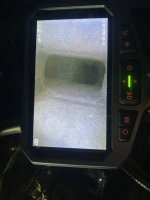
3) your elbows, spacers and manifolds may need replacing or, not, I have had 2 different systems on my old '88 OMC 4.3, the first was the OMC Batwings one piece elbows, these I ran till 2017 (had bought spares, was replacing every 5-7 seasons) they had long since gone NLA, so when I had to replace them then, I converted to the later OMC/Volvo 2 piece exhaust, these are less prone to clogging, the ones I have on now have been in use about 6 seasons, I see no sign of leaks around the outside joint and inside looks good, I use an endoscope camera to inspect for water leaking from the inside joint via one of the casting plugs in the elbow. When I trial run it, if my exhaust temps are normal (usually about 90-100* at idle, after coming off plane, at most 135-140* this is what I know to be normal for these because I have been checking them since I installed them with the IR temp gun). Again this is tested in the water not on the water hose.
I also scoped the inside of the combustion chambers via the spark plug hole and it looked good, no sign of water getting in.
Here's an example of a pic you can get of the inside.....you'd be looking for rust at the bottom of the manifold or leaking in around that joint....
exhaust staboard side.jpg
sometimes you might see small tiny blobs of corrosion, this is often not a leak but from condensation from a cool running exhaust, with these systems one side usually runs cooler than the other....
so through a process of elimination, start with #1, and go down the list
the other thing that can cause overheating is leaking head gaskets that are putting combustion gas into the cooling water. There is a clear hose test that can be used to check for that, hopefully it's not that because if so you're in for a bigger repair.
 
Top