






1977 Aquasport 222 Transom

qwest

Seaman
Joined
Aug 9, 2020
Messages
51
Hi,

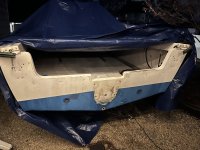
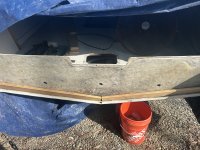
In the middle of replacing the transom on my aquasport and looking for some guidance.

I have just finished getting rid of the old rotten wood which was 100% wet all the way through. I plan on roughing up the bare glass with 40 grit prior to adding the new core & glass.

Im planning on using 2 sheets of 3/4 marine ply with a mix of csm, 1708 and either poly or vinylester resin/ putty to put it all together.

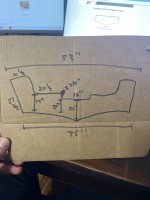
I would like to raise the height of transom on the sides as the original cut sat pretty close to the water line, especially with the 4 stroke I have for it.

I am trying to price out & plan the build so by the time the weather is consistent 60s/70s i can get it done over the course of a few days.

Any general advice or idea as to how much material I should plan to buy (gallons of resin/ yardage of glass)?

thank youIMG_2331.jpegIMG_2012.jpegIMG_921E6C03-EA1A-4020-BBA1-B774ED09EBBA.jpeg
 

MikeSchinlaub

Senior Chief Petty Officer
Joined
Jan 14, 2025
Messages
700
Good plan so far. Here's a breakdown of how I would do this job.


1. Once your two sheets are cut, mark all holes on the side facing the outer skin of the hull. This is to avoid putting a screw in a very inconvenient spot. Also be sure to cut a big half circle out where the drain plug will go. You will fill this area inside with putty. This will prevent any water that leaks from the drain or screws from getting to the wood.


2. Screw the two pieces together with a layer of csm between.


3. Clean up the edges, then putty it into place with your thickened resin. A transom that size will probably take about 10 quarts. You want a good 1/2 to 3/4 inches of putty on it. Put a 2x4 or 6 across the motor mount holes and those splashwell drain holes and lag through it to pull the transom tight. Lag through every hole, from bottom to top. Cover the hull, boards, and every hole with masking tape, that putty is going to ooze out everywhere. Get inside with a bondo spreader or similar and smooth out any putty that oozes around the edges. Fill in any voids. Let the putty set up overnight.


4. Once the putty has set, pull the lags out. Break them loose by hand first. Scuff up and smooth the putty on the inside.


5. Make sure to grind an area 6-8" out from the transom. Prep your glass. 2 layers of mat and one roving will be good. You can do the csm in as big of pieces you're comfortable with, but the roving needs to be one solid piece. Whatever you do, don't try to wet the big pieces and lift them into place. The weight of the resin will tear and stretch it and you'll have one hell of a mess. Lay them in place dry and wet in place. Any corner reliefs on the csm should be torn, not cut. Same with any overlaps. Do your mat, roll it out well, then roving and roll it out.


6. Once the glass is finished and set, scuff it and brush gel.


I would probably start with 5 gallons of resin, and I suck at math so whatever your surface area works out to for glass. Probably just draw a big rectangle around your drawing, and get two layers worth of csm and one of the roving. Also factor in lots of gloves, a gallon of acetone, some chip brushes, lots of plastic deli cups, mekp activator, and a full face respirator with the organic vapor cartridges. A half face will help you breathe, but the fumes building up in that confined space will burn your eyes.
 

qwest

Seaman
Joined
Aug 9, 2020
Messages
51
thank you mike, i appreciate the detailed response

a couple questions:
would it make sense to glass the two sheets together before putting them into place? The transom has a small curvature to it so im worried about a single 1.5” piece being too stiff to properly cure with the inner skin. Would extra putty take care of that?

Ive also seen some people use staggered cuts/ puzzle pieces in the core material if it cant fit in one piece, is it always best to fit it in one piece if possible?

when to drill all the holes for the cleats (originally inside on the top corners that are lagged thru to the outside skin), motor mounts, and drain plug. Should i use the areas for lagging the core to the inner skin with bolts that have a smaller diameter and then drill out to size once everything has cured?

sounds like ill need a lot more material than I thought so glad i asked. Luckily i have all of the disposables taken care of.

thank you!
 

MikeSchinlaub

Senior Chief Petty Officer
Joined
Jan 14, 2025
Messages
700
thank you mike, i appreciate the detailed response
I see now that you cut the outer skin off. I missed that earlier. Most of what I said doesn't make sense for this. I've only ever done them from the inside.

a couple questions:
would it make sense to glass the two sheets together before putting them into place?
I still think so. It would be extremely difficult to do while they're verticle.
The transom has a small curvature to it so im worried about a single 1.5” piece being too stiff to properly cure with the inner skin. Would extra putty take care of that?
I'm not sure I understand this. Are you worried about air voids? Your clamps/lags should pull the hull tight against the wood.

Ive also seen some people use staggered cuts/ puzzle pieces in the core material if it cant fit in one piece, is it always best to fit it in one piece if possible?
I don't see why it wouldn't fit in one piece. With the whole outer skin cut off, it should just set right where it needs to.

when to drill all the holes for the cleats (originally inside on the top corners that are lagged thru to the outside skin), motor mounts, and drain plug. Should i use the areas for lagging the core to the inner skin with bolts that have a smaller diameter and then drill out to size once everything has cured?
That's what I would do. Now, to try to fix what I said earlier to fit your situation.

1/2/3/4. Pretty much the same. Mark all hardware holes to avoid putting screws in the way. Screw the two pieces together with drywall screws. Clean up the edges and grind the protuding screw tips down. I forgot to mention that last time. Leave the screws in. Then lots of putty, set it in place, and use lags and clamps to secure it.

5. Here is where it gets different. Again, I've never cut the outer skin off, so I'm winging it a bit here. If this was inside, you would be doing all fresh glass. This would really tie everything into the structure of the hull. Ideally, I would recommend this here too, but that's going to leave you with a lot of bodywork and paint to do. You would also have to go even farther around the sides to try to blend it in.

In your case, you'll probably want to putty the skin back in place. You'll still have to use the boards, but get as much surface area covered as you can. The outer skin might flex otherwise and leave you with a wavy surface.

You also have to glass around the edges to tie it back into the sides. If you just fill the cuts with putty and leave it, it will crack. I think I would do a base layer of csm 16" wide and then a layer of 1708 over it. Grind a generous bevel into the gel and lay the glass over it. You can smooth out the edges, but don't take any material off past that. It won't be pretty, but the alternative is a lot more work and expense.

6. Same as before. Scuff the glass and brush gel it.

So, that's a big difference in materials if you reuse the skin. Less glass work, but you're doing the putty twice. I should also mention that I've only worked with all purpose/finish polyester resin. They have a wax that rises to the surface and makes it cure all the way through. There is resin without wax that will leave the surface sticky, but I've never used it.
 

Scott Danforth

Grumpy Vintage Moderator still playing with boats
Staff member
Joined
Jul 23, 2011
Messages
52,226
repairing from the outside makes the job 4x as hard as the inside because you still have to address the flotation foam and stringers, and now you have to tie the fiberglass back up the sides of the boat about 8-10" and fair the sides and transom
 
Top