Rebuilding my console

zopperman

Lieutenant Commander
Joined
Jun 22, 2011
Messages
1,551
SO I'm rebuilding my dash console completely. I'm going to have:

Bow light & stern light to 6 pole switch
fuel gauge and sending unit (BRAND NEW :))
New steering wheel
Cigarette lighter plug
Electric horn switch
EDIT: ALSO INCLUDED: Bilge pump (duh)

My question is, I'm going to fuse everything in one fuse block, then have all the output wires go to one big 8 gauage wire that will go to the battery with a 30 amp fuse in it.

Is this how I should wire it? What size fuse does each accessory need?

Thanks in advance

Zak
 

Splat

Lieutenant
Joined
Jul 20, 2008
Messages
1,366
Re: Rebuilding my console

Hi Zak,

We need a bit more information here. But your on the right track. We need to know the total amp draw of all your accessories that will be running on that fuse block. If you can't look up the operating currents, let us know what accessories and we can make an educated guess. We also need to know how long of a run is the wiring from your console to your battery. This two pieces of info will help us figure out what gauge wire you'll need to run. More amp/longer run= larger gauge wire.

Your individual fuses should be about equal or a little above the maximum expected current of each accessory. For instance you don't need or want a 20 amp fuse feeding just your fish finder.

Bill

Actually I just re read your post, educated guesses would be

Lights 5 amp
Cigarette lighter prolly rated at 10-15 amp, I would use a 10 amp fuse.
Horn, that's a tough one. Depending on the type of horn I would guess 7.5 amp prolly enough
The fuel gauge prolly only needs a 1a fuse at the most.
 

zopperman

Lieutenant Commander
Joined
Jun 22, 2011
Messages
1,551
Re: Rebuilding my console

Great, Thanks Bill!

I've done a little electrical work before on my trucka nd my old boat, but this one is a compete overhaul, starting from scratch.

It's probably going to be about 10 feet of the + wire from the fuse block to the battery.

What would be the problem with putting in a fuse too high or low amprage? I'm guessing too low, it'll blow and too high it won't and your battery gets toasted?

SO each accessory is basically fused twice, right? once in the block, and once with the big fuse at the end close to the battery?
 

Silvertip

Supreme Mariner
Joined
Sep 22, 2003
Messages
28,771
Re: Rebuilding my console

Too high amperage will not toast the battery but it will toast the wire. No -- each item is not fused twice. The run of wire from the battery to the fuse block is protected by the 30A fuse at the battery. Each fuse IN the fuse block protects the circuit it is assigned to. 5 - 7.5 amps is fine for NAV lights. The fuel gauge is powered from the "A" (accessory) terminal on the ignition switch. No fuse is necessary since the entire engine harness is protected with the fuse at the engine. The only question mark is with the accessory plug. Those receptacles are rated with a maximum current rating PROVIDED the appropriate size wire is used to wire it. If you used 14 gauge wire the fuse should be 15A and it wouldn't make any difference what you plugged into it provided it didn't draw more than 15 amps. The horn is another matter as to what current it draws. It must be fused accordingly. Some horns require a relay since the switch cannot handle the current the horn draws. Two fuses would be needed in that case - one for the switch circuit and one for the high current feed to the relay. We can help you with that wiring if you feel a relay is needed.
 

zopperman

Lieutenant Commander
Joined
Jun 22, 2011
Messages
1,551
Re: Rebuilding my console

Interesting. So the gas gauge "i" post gos to the IGN.. makes sense lol. So the fuses really protect the wire more than the accessory and depend on wire size... not accessory. I don't think a relay will be necessary as the old wiring didn't include one. Is there any way to find out how much current the horn draws?
 

zopperman

Lieutenant Commander
Joined
Jun 22, 2011
Messages
1,551
Re: Rebuilding my console

Oh and I forgot, I also have a windshield wiper. with two + wires. WHat size wire/fuse should be used for that? Can I use one fuse for both + wires?
 

Grandad

Lieutenant Commander
Joined
Jun 7, 2011
Messages
1,504
Re: Rebuilding my console

Hi Zopperman, Fuses protect both the wire and the appliance. If you used an oversized wire for a given small appliance, a large fuse rated to protect the wire would allow the appliance to fry if it developed an internal short.
Another thing; as you have rightly deduced, too small a fuse will blow without apparent cause. This can cause unnecessary concern and troubleshooting. Worse yet, a critical circuit such as your bilge pump must be available in an emergency. If your pump is rarely used, an undersized fuse might hold long enough to pump your bilge once and will cool before the next pump cycle. But getting a hole in your hull will cause the pump to work overtime and the undersized fuse will blow at the worst possible moment. So, ask yourself how critical the appliance will be needed; eg- your navigation lights are more critical than your interior lights.
Also, misc unimportant appliances can be grouped together, but don't group critical stuff on the same fuse. Use separate fusing for nav lights, bilge pump, etc. but you could group your stereo with your interior lights without worry.
- Grandad
 

zopperman

Lieutenant Commander
Joined
Jun 22, 2011
Messages
1,551
Re: Rebuilding my console

Good thinking.. forgot in include the bilge pump. WHat should I fuse that with? it has about 16 gauage wire
 

Grandad

Lieutenant Commander
Joined
Jun 7, 2011
Messages
1,504
Re: Rebuilding my console

Good thinking.. forgot in include the bilge pump. WHat should I fuse that with? it has about 16 gauage wire

Most quality components will have a current or wattage rating as well as a voltage rating marked on them. If not, if you're kinda handy, you can measure the current using an ammeter while the pump is running. It must be pumping water during the test measurement to ensure it is under maximum load. I would fuse it at least 200% of its current rating since it is a critical component. - Grandad
 

zopperman

Lieutenant Commander
Joined
Jun 22, 2011
Messages
1,551
Re: Rebuilding my console

WHat setting would I use on the meter? I might give this a go today..
 

Grandad

Lieutenant Commander
Joined
Jun 7, 2011
Messages
1,504
Re: Rebuilding my console

WHat setting would I use on the meter? I might give this a go today..

You require a DC ammeter or a multimeter with a DC amp reading capability. Digital meters often are auto-ranging, but if you're required to choose a range, the most accurate readings will be obtained about midrange. So if we guess your pump to draw about 5 amps, the most accurate range would be 0-10 amps. Suggest you start by erring on the high side and reduce the range once you have a ballpark number.
A word of CAUTION - an ammeter is placed in SERIES with the load, such that all current flowing through the pump is measured by the meter. To properly do its job, the ammeter must have a low resistance, offering no opposition to current flow, otherwise the meter itself will interfere with an accurate reading. The only opposition to current flow is provided by the pump. Therein lies the vulnerability in an ammeter. If you apply an ammeter, even momentarily, in parallel with the pump such that 12 volts is directly connected across the leads, you will instantly destroy the meter or if you're lucky, just blow a protective fuse inside it. What kind of meter do you have? If you don't have one yet, perhaps I can suggest one that should be adequate for most home use: http://www.lowes.com/pd_292768-12704-61-310_4294857682+5003697_4294937087_?productId=3095863&Ns=p_product_prd_lis_ord_nbr|0||p_product_quantity_sold|1&pl=1&currentURL=%2Fpl_15%2B25_4294857682%2B5003697_4294937087_%3FNs%3Dp_product_prd_lis_ord_nbr|0||p_product_quantity_sold|1&facetInfo=$15%20-%20$25
 

zopperman

Lieutenant Commander
Joined
Jun 22, 2011
Messages
1,551
Re: Rebuilding my console

Series... Parallel? don't i do + on the voltmeter to + and - to -? I have one from radio shack...

ALso picked up a fuse block and some switches :)
 

zopperman

Lieutenant Commander
Joined
Jun 22, 2011
Messages
1,551
Re: Rebuilding my console

BTW will be using a car horn.. any guesses to fusing it?
 

Grandad

Lieutenant Commander
Joined
Jun 7, 2011
Messages
1,504
Re: Rebuilding my console

Series... Parallel? don't i do + on the voltmeter to + and - to -? I have one from radio shack...

Yes and no. Yes, you could connect a voltmeter + to + and - to -. A voltmeter is not an ammeter. If you have a multimeter, you have several meters built into one tester. When you select your scales, you're switching between the various meter functions, typically volts, amps and ohms. As I said before, an ammeter has a very low resistance because you are using it to measure current that is being limited by the resistance of the component that you are trying to measure current flow through. If there was no resistance, the current flow would be infinite (a short circuit) and something's gonna get damaged. An ammeter must be connected only in SERIES with some resistance.
A voltmeter (or a multimeter set to read volts) has a very high resistance built into its circuitry. It is most often connected in PARALLEL with a component for the purposes of measuring the voltage (or potential difference or "electrical pressure") across the 2 leads. It can withstand the voltage "pressure" because it has high resistance and only a very small current will flow through the meter.
The other meter function that a multimeter has is the ohmmeter function. It is intended to measure the resistance of a circuit in units called "ohms". It must never be connected to a live circuit or, again, it too can be destroyed.
With all due respect, if you don't know the basics of series and parallel circuit connections before you get started, you'll very quickly get into trouble trying to rewire, build or even analyze your boat's circuitry. I suggest that you consult the internet using such sites as http://openbookproject.net//electricCircuits/DC/DC_5.html
The same site is filled with free info on how to connect meters, etc
http://openbookproject.net//electricCircuits/DC/index.html
I teach apprentice electricians and know what you're up against here. I can't help you much in these posts until you've got the basics figured out. You gotta do your homework first or hand the job off to someone better qualified.
I'm going to bed. Gotta get up again in 5 hours. - Grandad

 

zopperman

Lieutenant Commander
Joined
Jun 22, 2011
Messages
1,551
Re: Rebuilding my console

Great resources, thanks for the help, and don't worry, no offense taken, i'm a huge novice. I do have a multimeter. i have uses the ohms resistance test on my motor to check the points and I've used to to make sure I had current going through circuits, but that's really it. I'm hoping with this site and eveyrthing I'll be able to do this project. I think I really just need to figure out at what amperage to fuse my accessories...
 

zopperman

Lieutenant Commander
Joined
Jun 22, 2011
Messages
1,551
Re: Rebuilding my console

Hi Zak,

Actually I just re read your post, educated guesses would be

Lights 5 amp
Cigarette lighter prolly rated at 10-15 amp, I would use a 10 amp fuse.
Horn, that's a tough one. Depending on the type of horn I would guess 7.5 amp prolly enough
The fuel gauge prolly only needs a 1a fuse at the most.

So if I fuse these like this, what gauage wire should I use? I have a bunch of 12 or 14 g laying around. can I use that?

ALSO I got a free VHF radio from the 80's. how should I fuse that?

BTW I'm using the cylindrical fuses in a block, is that OK? (it's cheaper)
 

produceguy

Lieutenant Junior Grade
Joined
Sep 30, 2010
Messages
1,243
Re: Rebuilding my console

Great thread. I'm learning alot here guys, keep it up.
 

NYBo

Admiral
Joined
Oct 23, 2008
Messages
7,107
Re: Rebuilding my console

So if I fuse these like this, what gauage wire should I use? I have a bunch of 12 or 14 g laying around. can I use that?

ALSO I got a free VHF radio from the 80's. how should I fuse that?
BTW I'm using the cylindrical fuses in a block, is that OK? (it's cheaper)
16 gauge wire is sufficient for everything but the accessory outlet, for which I would go with 14. No problem going bigger, though.

A 3 amp fuse should be sufficient for the VHF.

My boat has the original fuse block with glass fuses, and everything is still clean and tight, so I don't see a problem going that way if you've already bought the fuse block.
 

zopperman

Lieutenant Commander
Joined
Jun 22, 2011
Messages
1,551
Re: Rebuilding my console

Yeah, I have two 4 fuse, fuse blocks.
So a bit of an edit -- I'm going to have:

Radio
Bulge pump (maybe two)
Horn (it's an old car horn that I put on a marine trumpet horn :D)
outlet
fuel gauge

and I'm going to fuse everything the way you guys recommended. WHat size wire should I use for my + and = feeds to the battery.
BTW -- everyone that's been so helpful here, I posted another thread about my fuel sending unit here: http://forums.iboats.com/showthread.php?t=500353
and I could really use some help... since I welded the unit down because I don't have helicoils or access to them and I figured self tapping screws wouldn't seal well so I really need to figure out what's up with the unit :confused:
 

Grandad

Lieutenant Commander
Joined
Jun 7, 2011
Messages
1,504
Re: Rebuilding my console

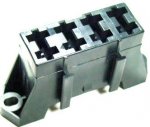
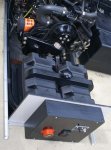
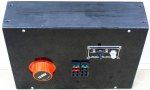
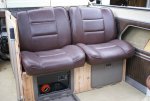
Hi Zopperman, You asked if glass fuses are OK. As was answered earlier they certainly are, but the type of fuseholder you use is sometimes determined by the location. Fuses must be readily accessible for troubleshooting, yet be protected from damage by accidental contact. "Location, location, location". I have 2 fuseblocks because I wanted to have power where I needed it. Under the dashboard, I have a glass tube fuseholder protected behind a hinged plexiglass cover that supplies local things switched from the helm (nav lites, blower, horn, radio, VHF, etc). When I rewired my I/O's doghouse area to relocate the batteries, I rewired the control to my bilge pump and wanted fuses nearby for it and misc other loads. I found it best to use a pair of "deadfront" style ATC fuseholders that expose the fuses but all live parts are behind a panel cover. I'll try to add pictures to this post, but it's my first attempt. Wish me luck. - Grandad
 

Attachments

  • ATC Fuseblock.jpg
    ATC Fuseblock.jpg
    39 KB · Views: 0
  • DSC01016 Reduced 1.jpg
    DSC01016 Reduced 1.jpg
    93.7 KB · Views: 0
  • DSC01017 Reduced1.jpg
    DSC01017 Reduced1.jpg
    139.9 KB · Views: 0
  • 17 Reduced 1.jpg
    17 Reduced 1.jpg
    62.7 KB · Views: 0
Top